


A Knight of the Seven Kingdoms: A Return to Storytelling That Actually Works





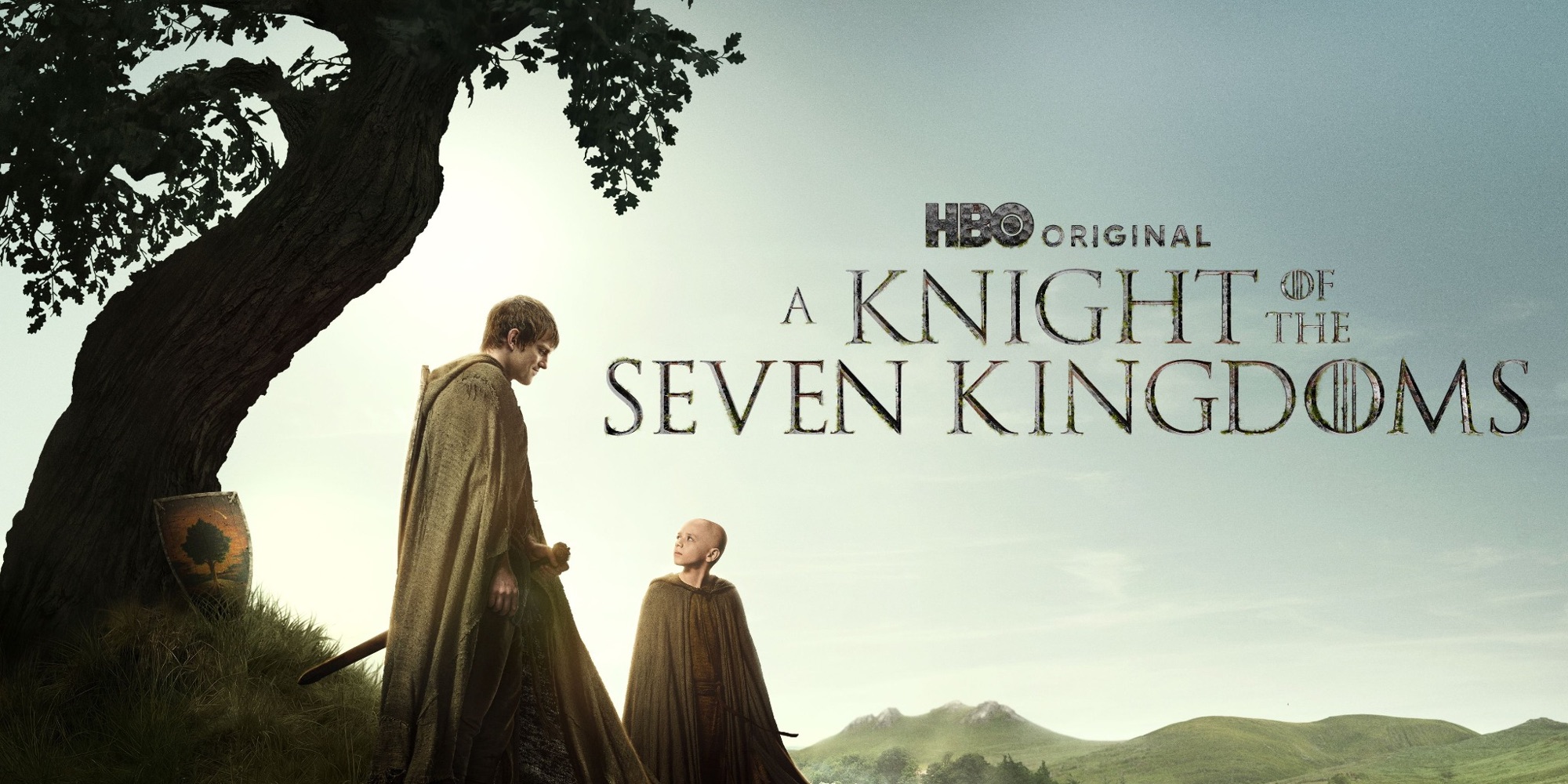
I didn’t expect to love A Knight of the Seven Kingdoms as much as I did. It’s not because the world isn’t compelling, it obviously is, but because prequels, especially in massive franchises, tend to fall into one of two traps: either they try too hard to be epic, or they drown in lore.
This does neither, instead, it does something much rarer: it tells a simple story, well.
The Return of the Hero’s Journey
At its core, this is a classic hero’s journey, not the modern version, where the hero is secretly perfect or the arc is subverted for cleverness. The real version:
- A flawed, underpowered protagonist.
- Navigating a world far bigger and more dangerous than himself.
- Learning, stumbling, and growing along the way.
It’s almost shocking how refreshing that feels. We’ve gotten so used to irony, anti-heroes, and deconstruction that seeing a straightforward, earnest journey play out competently feels… novel.
An Unlikely Friendship at the Center
What truly elevates the story is the relationship at its core. The dynamic between Dunk and Egg isn’t just charming, it’s the entire point.
You have:
- A physically imposing, good-hearted, somewhat naïve knight.
- Paired with a small, sharp, politically aware boy.
Individually, they’re incomplete. Together, they work. It’s a classic pairing, but executed with restraint and authenticity. There’s no forced sentimentality. The bond builds organically through shared hardship, small moments, and mutual dependence.
Because of that, it lands.
A Different Kind of Protagonist
I’ll admit this is where I was skeptical. I generally don’t love protagonists who aren’t particularly sharp. Intelligence is usually what makes characters compelling.
Dunk is… not that. He’s not especially clever. He’s not strategic. He’s not playing five-dimensional chess.
But he is:
- Kind.
- Loyal.
- Brave in a very human, non-theatrical way.
Somehow, that works. His naïveté isn’t frustrating, it’s disarming. There’s a sincerity to him that feels almost out of place in a world as cynical as Westeros.
That contrast is exactly what makes him compelling.
Egg: The Counterbalance
Of course, Dunk only works because of Egg.
Egg brings what Dunk lacks:
- Intelligence.
- Strategic thinking.
- An understanding of power and how it operates.
Where Dunk has strength, Egg has insight. Where Dunk reacts, Egg anticipates.
Quietly, beneath it all, Egg carries something even more interesting: a latent command of power. Not just intellectually, but instinctively. You get the sense that he understands the game at a level far beyond his years. That balance between them is what gives the story its texture.
It’s not just friendship, it’s symbiosis.
Smaller Scale, Higher Impact
One of the smartest choices the show makes is restraint. This isn’t about saving the world. It’s not about existential threats or continent-spanning wars.
It’s about smaller stakes:
- Honor.
- Identity.
- Survival.
- Doing the right thing when it’s inconvenient.
And paradoxically, that makes it feel more real, more human, more engaging.
A Tone That Actually Works
There’s an earnestness here that would normally feel risky, but it lands because it’s grounded. The humor is light, character-driven. The drama comes from decisions, not spectacle. The pacing allows relationships to develop instead of rushing to the next “big moment.” It trusts the audience, which, again, is rarer than it should be.
The Bigger Picture
What A Knight of the Seven Kingdoms gets right is something the industry seems to have forgotten:
- You don’t need bigger stakes.
- You need better characters.
- You need relationships that feel real.
- You need a journey that means something.
Final Take
If you’re expecting another sprawling, high-stakes epic, this isn’t it. It’s better. It’s a reminder that storytelling doesn’t need to be reinvented to be compelling, it just needs to be executed well.
When it is, even a simple tale of a knight and a boy can feel extraordinary.